
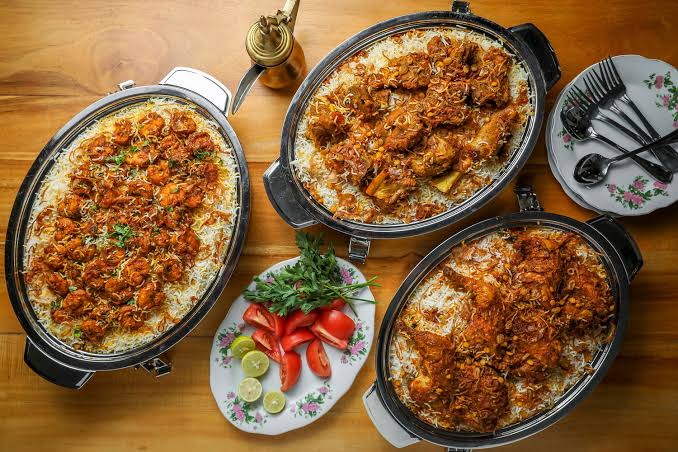
Emirati cuisine doesn’t get nearly as much global attention as its Levantine or South Asian neighbours, but it has a genuinely distinct identity — shaped by desert survival, coastal fishing, and centuries of oasis agriculture and Gulf trade. At the heart of it all is Bezar, a signature spice blend of cumin, coriander, turmeric, cinnamon, fennel seeds, and dried chilies, supported by saffron, cardamom, and loomi (dried lime) for tang. Unlike Levantine cuisine’s reliance on olive oil and fresh herbs, Emirati cooking leans into slow-cooked rice dishes and warming spice combinations. Here are six of the most famous dishes to try, along with where to find them and what makes each one special.
1. Machboos — The UAE’s National Dish
What it is: Machboos is widely considered the UAE’s national dish — a fragrant rice preparation cooked with chicken, lamb, or fish, combined with dried lime (loomi), tomatoes, onions, and a blend of spices including cinnamon, cardamom, and cloves. What makes it special is its slow-cooking process, which allows the rice to fully absorb the dish’s deep, layered flavours. It’s commonly served during family gatherings and special occasions, and a coastal variation swaps meat for local fish like hammour (grouper) or safi, offering a lighter, subtly sweet alternative that reflects the UAE’s fishing heritage.
Where to eat it: Heritage-style restaurants such as Al Fanar Restaurant & Cafe (with branches across Dubai, Sharjah, and Al Barsha) specialise in serving Machboos in an authentic, nostalgic setting. It’s also a staple at most traditional Emirati restaurants across the UAE, as well as at Dubai desert safari camp dinners.
Timings: Typically served for lunch and dinner; desert safari versions are usually part of an evening dining programme.
Connectivity: Most heritage restaurants serving Machboos are reachable by taxi or car; check individual restaurant listings for nearby metro or bus access.
2. Harees — A Bedouin Comfort Food Classic
What it is: Harees is a slow-cooked porridge of wheat and meat, beaten and simmered until it reaches a smooth, thick, almost mash-like consistency. It’s a genuine comfort food rooted deeply in Emirati tradition, often enjoyed as a side dish with bread and meat, or on its own. Harees has also become one of the most popular street foods across the wider UAE, prized for its rich texture and warming, mildly spiced flavour.
Where to eat it: Dedicated spots like Harees Al Fareej (with branches across Dubai’s Al Khawaneej area and Abu Dhabi’s Al Shahama) build their entire menu around the dish, while it’s also commonly available at general Emirati restaurants and during Ramadan food stalls across the country.
Timings: Traditionally more popular in the evening, particularly during Ramadan, though available year-round at most venues serving it.
Connectivity: Reachable by car or taxi; specific branches vary in their proximity to metro or bus routes.
3. Thareed — Emirati Bread Stew
What it is: Often described as Emirati-style bread stew, Thareed combines thin flatbread (rigag) soaked in a rich, slow-cooked broth of chicken, lamb, or goat, along with roasted vegetables like potatoes, tomatoes, marrow, and pumpkin. It can also be prepared as a fully vegetarian dish by omitting the meat. The flavoursome stew, served atop the traditional thin bread, is a genuine favourite among both locals and food-curious visitors.
Where to eat it: Seven Sands in Jumeirah Beach Residence is a specifically noted spot for Thareed, with lamb thereed priced around AED 84 and vegetarian or chicken versions around AED 74 per plate. It’s also commonly found at other traditional Emirati restaurants across the UAE.
Timings: Generally available for lunch and dinner service.
Connectivity: Seven Sands, located in JBR, is well served by taxi, ride-hailing, and the wider Dubai Marina/JBR public transport network, including nearby Dubai Marina Metro Station on the Red Line, followed by a short walk or tram connection.
4. Luqaimat — The UAE’s Beloved Dessert
What it is: No list of Emirati dishes is complete without Luqaimat — small, deep-fried dough balls that are crispy on the outside and soft on the inside, typically drizzled with date syrup (dibs) or honey and sprinkled with sesame seeds. It’s a genuinely beloved dessert during festivals, family gatherings, and especially Ramadan evenings, when street stalls and home kitchens alike churn out fresh batches for iftar.
Where to eat it: Widely available across UAE street food stalls, traditional restaurants, and dedicated dessert cafés, particularly during Ramadan when pop-up stalls appear across malls and markets citywide.
Timings: Most popular in the evening, especially during Ramadan, though available year-round at most Emirati restaurants and dessert spots.
Connectivity: Given how widely available Luqaimat is across the UAE, connectivity depends entirely on which specific venue or stall you’re visiting — most are accessible via standard city taxi, metro, or bus networks depending on location.
5. Balaleet — A Sweet-and-Savoury Breakfast Staple
What it is: One of the most distinctive dishes in Emirati cuisine, Balaleet consists of vermicelli noodles flavoured with saffron and cardamom, topped with a thin omelette. This sweet-and-savoury fusion reflects the UAE’s historic trade routes connecting the region with South Asia, and offers reassurance to visitors wondering whether Emirati food is intensely spicy — breakfast dishes like this one are aromatic rather than hot, with generally moderate spice levels throughout.
Where to eat it: Available at most traditional Emirati breakfast spots and heritage restaurants, alongside other breakfast classics like Chebab (saffron and cardamom pancakes served with date syrup and cheese) and Khameer (date-sweetened bread paired with honey or eggs).
Timings: A breakfast dish, typically served in the morning hours.
Connectivity: Widely available across UAE breakfast venues, generally accessible via standard city transport depending on the specific restaurant chosen.
6. Khuzi — The UAE’s Grand Celebration Dish
What it is: Considered by many to be the true national centrepiece dish of Emirati cuisine, Khuzi features a whole roasted lamb served on a bed of spiced rice, garnished with nuts and raisins. This grand dish represents generosity and celebration, and is one of the most iconic traditional foods served during weddings and major events — a dish built around hospitality and abundance rather than everyday dining.
Where to eat it: Given its scale and ceremonial nature, Khuzi is less commonly found as a standard restaurant menu item and more often served at special events, large family gatherings, or by specific heritage restaurants and catering services that specialise in traditional Emirati banquets — it’s worth calling ahead to confirm availability, since preparation typically requires advance notice given the dish’s scale.
Timings: Generally reserved for special occasions rather than daily service; advance booking is typically required.
Connectivity: Since Khuzi is often served at private events or specific heritage venues, connectivity depends entirely on the specific location — check with individual restaurants or caterers for exact details.
Beyond the Top 6: A Few More Worth Knowing
The culinary map of the UAE extends well beyond these six dishes. Madrooba, a special comfort dish of rice and meat or salted fish beaten into a smooth paste, is a genuinely labour-intensive preparation often reserved for Ramadan or important meals. Kousa Mahshi (stuffed zucchini with rice, often topped with yoghurt) and Machboos’s grilled meat cousin Chelo Kebab, served over saffron-scented rice, are also frequently cited among the country’s most-loved dishes. And no meal is complete without a cup of Gahwa (Arabic coffee, lightly roasted and brewed with cardamom, sometimes saffron) or Karak chai, a strong, spiced milk tea — offering either is considered a genuine sign of hospitality and welcome in Emirati culture.
FAQs — Most Famous Food in the UAE
Q1. What is the national dish of the UAE? A: Machboos is widely regarded as the UAE’s national dish — a fragrant spiced rice dish cooked with chicken, lamb, or fish. Khuzi (whole roasted lamb over spiced rice) is also often cited as a ceremonial national centrepiece for major celebrations.
Q2. Is Emirati food spicy? A: Not particularly — Emirati cuisine relies on aromatic spice blends like Bezar rather than intense heat, so most dishes, including breakfast items like Balaleet, are flavourful but only moderately spiced.
Q3. Where is the best place to try authentic Emirati food? A: Heritage restaurants like Al Fanar Restaurant & Cafe (with branches across Dubai and Sharjah) and Seven Sands in JBR are well-regarded starting points, alongside dedicated spots like Harees Al Fareej for specific traditional dishes.
Q4. What’s a good vegetarian option within Emirati cuisine? A: Thareed can be prepared as a fully vegetarian dish by omitting the meat, and Kousa Mahshi (stuffed zucchini) is another naturally vegetarian-friendly traditional option.
Q5. When is the best time to try dishes like Luqaimat and Harees? A: Both are especially popular during Ramadan evenings, when street stalls and restaurants across the UAE serve them fresh for iftar, though they’re available year-round at most traditional restaurants.
Q6. Is Khuzi available at regular restaurants, or only for special events? A: Given its scale and ceremonial nature, Khuzi is more commonly served at weddings, large gatherings, or through specific heritage caterers rather than as a standard daily menu item — advance booking is typically needed.
Q7. Is there a metro station near most Emirati restaurants? A: It varies by venue — Seven Sands in JBR is well served by Dubai Marina Metro Station on the Red Line, but many heritage-style restaurants across the UAE are best reached by taxi or car given their standalone, village-style settings.